
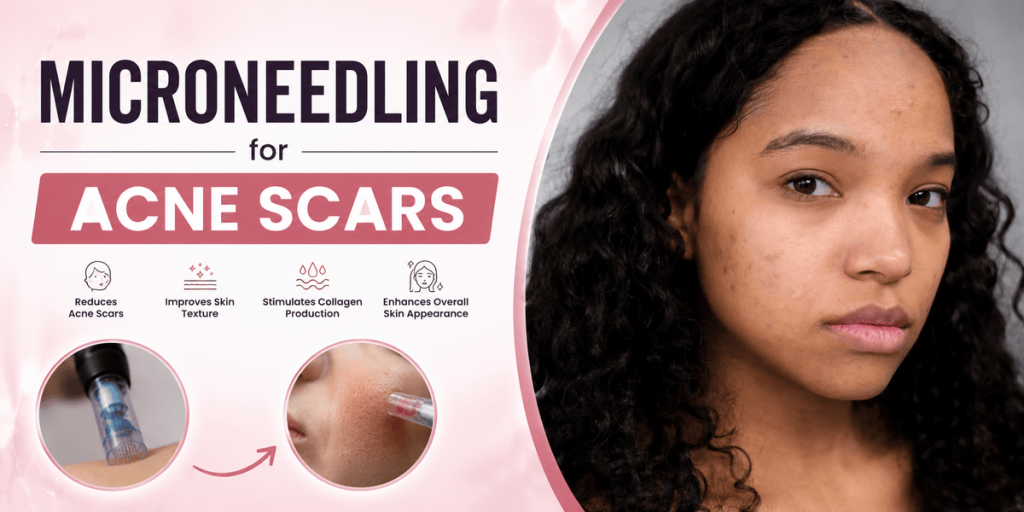
Acne may disappear, but acne scars can remain visible for years. These marks develop when inflammation caused by acne damages the skin’s deeper layers and disrupts normal collagen production. As the skin heals, uneven collagen rebuilding can leave behind depressed or textured scars.
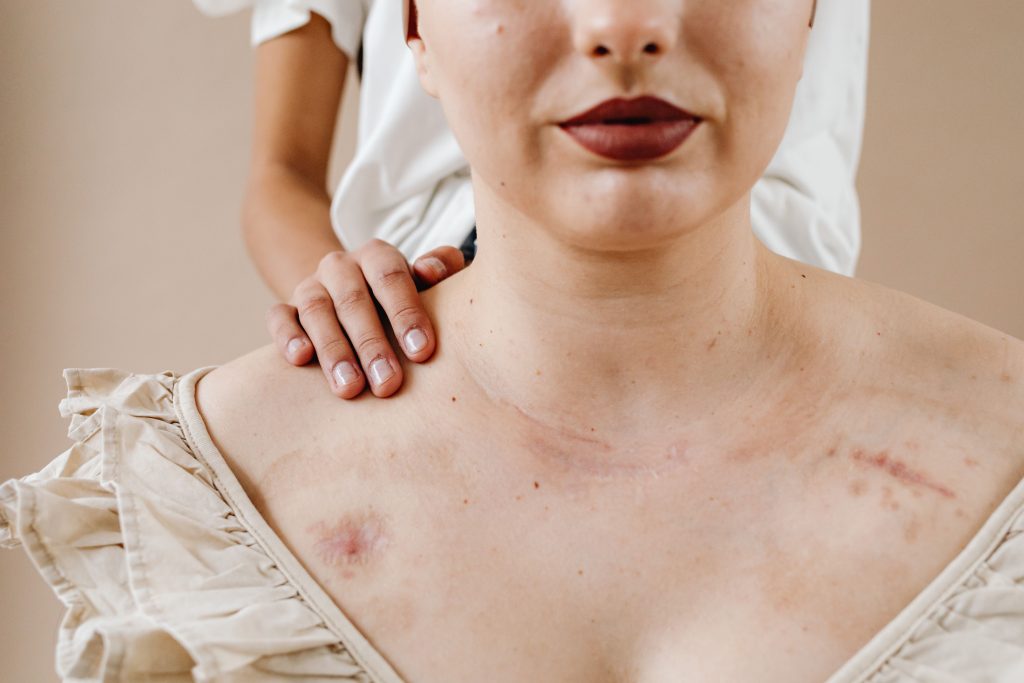
Because of this, many people search for effective acne scar treatment options that improve skin texture without surgery. Microneedling is one therapy that is still gaining popularity. Microneedling is a minimally invasive procedure that stimulates the body’s natural skin healing process. By creating controlled micro-injuries, it encourages collagen production, skin regeneration, and skin resurfacing. Over time, these benefits can promote healthier-looking skin and help repair acne scars. This guide describes the benefits, anticipated outcomes, healing process, and whether microneedling for acne scars is the right course of action for you.
How Does Microneedling Operate?
Microneedling is a cosmetic procedure that uses a specialised microneedling device equipped with fine needles. These needles create tiny punctures in skin, forming microscopic channels known as microchannels.
The treatment is often referred to as collagen induction therapy because its primary goal is to stimulate collagen production and elastin formation within the skin.
Understanding Collagen Induction Therapy
Collagen is the structural protein responsible for skin strength, elasticity, and smoothness. When acne damages collagen fibres, scars can develop.
Microneedling triggers the body’s repair response by encouraging the following:
- Collagen rebuilding
- Skin collagen stimulation
- Skin regeneration
- Skin repair therapy
- Skin remodeling
Over time, these processes help rebuild skin tissue and improve damaged skin tissue affected by acne.
How a Microneedling Device Creates Tiny Punctures in Skin
During treatment, a dermaroller or automated microneedling device passes across the skin surface.
The needles create controlled micro-injuries that:
- Activate the skin healing process
- Promote collagen production after microneedling
- Improve product absorption
- Encourage skin rejuvenation
- Support facial rejuvenation
Unlike aggressive procedures, microneedling is considered a minimally invasive procedure with relatively short downtime.
Dermaroller vs Professional Microneedling Treatment
| Feature | Dermaroller | Professional Microneedling Treatment |
| Needle Depth | Limited | Adjustable |
| Precision | Moderate | High |
| Results | Mild | More Noticeable |
| Safety | User-dependent | Professional Supervision |
| Best For | Maintenance | Acne Scar Treatment |
A professional skincare treatment typically delivers better results because a trained skincare professional can customise needle depth based on scar severity.
How Does Microneedling Work for Acne Scars?
One of the most common questions is, ‘How does microneedling work for acne scars?’
The answer lies in collagen rebuilding.
When acne damages collagen structures beneath the skin, uneven healing can create scar tissue. Microneedling helps break down old scar tissue while encouraging fresh collagen formation.
How Collagen Production Helps Repair Acne Scars
The treatment encourages:
- New collagen fibers
- Improved skin texture
- Stronger skin support structures
- Better scar reduction
- Enhanced skin repair
As collagen accumulates, depressed scars gradually appear shallower.
Skin Regeneration and Skin Resurfacing
Microneedling supports several beneficial processes:
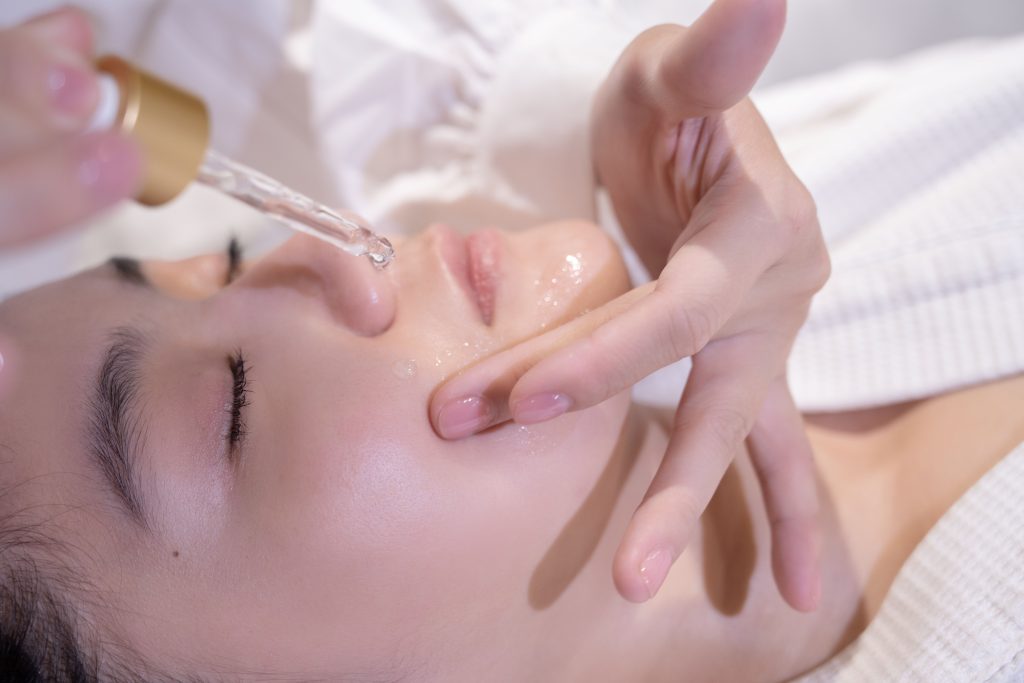
- Skin regeneration
- Skin resurfacing
- Skin healing
- Skin repair
- Acne scar correction
These improvements help reduce scar appearance and create smoother skin.
Why Microneedling Is Effective for Skin Resurfacing
Microneedling targets the root cause of many acne scars: damaged collagen.
Rather than simply treating the surface, the procedure works below the skin to promote long-term skin remodelling and acne scar improvement.
Types of Acne Scars That Microneedling Can Treat
Several forms of acne scars can benefit from microneedling treatment.
Microneedling for Boxcar Scars
Boxcar scars are large, well-defined indentations. Because these scars often result from collagen loss, microneedling for boxcar scars may improve their depth and visibility.
Microneedling for Rolling Scars
Rolling scars create a wave-like skin texture. Microneedling for rolling scars can help stimulate collagen beneath the skin and improve surface smoothness.
Microneedling for Ice Pick Scars
Ice pick scars are narrow and deep. Microneedling for ice pick scars may improve appearance, although severe cases often benefit from combination treatments.
Microneedling for Deep Acne Scars
Microneedling for deep acne scars generally requires multiple sessions and may be combined with other acne scar procedures for better outcomes.
Microneedling for Pitted Acne Scars
Pitted scars respond differently depending on depth. Consistent treatments can support acne scar healing and visible improvement over time.
Is Microneedling Effective for Acne Scars?
Research and clinical experience suggest that microneedling is effective for many individuals dealing with acne scars.
Factors That Influence Success
Results depend on:
- Scar type
- Scar depth
- Age of scars
- Skin type
- Number of treatments
- Provider experience
Microneedling Results for Acne Scars
Many patients notice:
- Improved acne scar appearance
- Better skin texture improvement
- Smoother skin
- Enhanced skin rejuvenation
- Reduced scar visibility
However, expectations should remain realistic. Microneedling can significantly improve acne scars, but complete acne scar removal is not always possible.
Acne Scar Improvement Rates
Visible improvements often begin after several sessions. Most treatment plans involve multiple microneedling sessions for acne scars to maximise collagen rebuilding and skin recovery.
Words & Meanings
| Word | Meaning |
|---|---|
| Microneedling | A cosmetic procedure that uses tiny needles to improve skin texture. |
| Collagen | A protein that keeps skin firm, smooth, and youthful. |
| Acne Scars | Marks left on the skin after acne heals. |
| Dermaroller | A handheld device covered with tiny needles used for microneedling. |
| Regeneration | The process of repairing and renewing damaged skin cells. |
| Resurfacing | Improving the skin’s texture by encouraging new skin growth. |
| Scar Tissue | Fibrous tissue that forms during the healing of damaged skin. |
| Microchannels | Tiny openings created in the skin during microneedling. |
| PRP | Platelet-rich plasma, a treatment that uses a patient’s blood components to support healing. |
| Rejuvenation | The process of making skin appear fresher, healthier, and younger. |
Conclusion
Microneedling has become one of the most popular treatments for acne scars because it helps stimulate collagen production and supports the skin’s natural healing process. By creating controlled micro-injuries, the treatment encourages collagen rebuilding, skin regeneration, and skin resurfacing, which can improve the appearance of boxcar scars, rolling scars, and some ice pick scars.
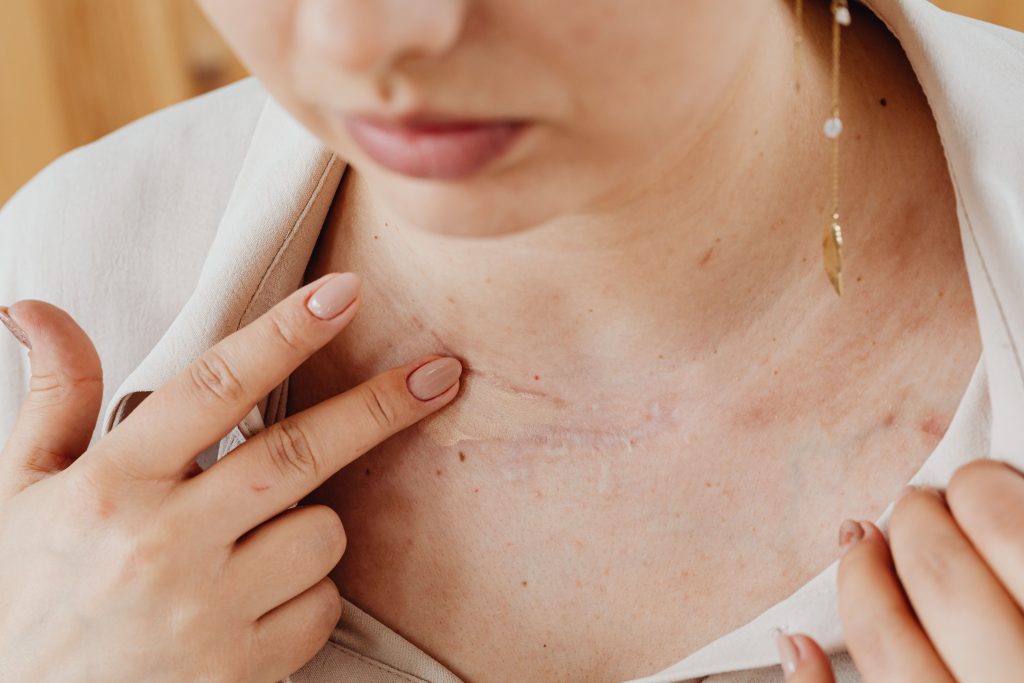
While microneedling may not completely remove acne scars, it can significantly reduce scar appearance, enhance skin texture, and promote smoother, healthier-looking skin. Results vary depending on scar type, skin condition, and the number of treatment sessions. For the best outcome, consult a qualified skincare professional who can create a treatment plan tailored to your needs.
FAQs
Is microneedling an effective treatment for acne scars?
Yes. Microneedling can improve acne scars by stimulating collagen production and encouraging skin repair. Most people notice smoother skin texture and reduced scar visibility after multiple sessions.
How many microneedling sessions are needed for acne scars?
Most individuals require 3 to 6 microneedling sessions for acne scars. Deep or severe scars may require additional treatments to achieve noticeable improvement.
Can microneedling remove acne scars permanently?
Microneedling can significantly improve acne scars, but it may not completely remove them. The treatment focuses on reducing scar depth and improving overall skin appearance.
What is the average microneedling recovery time?
Recovery time is usually 24 to 72 hours. Mild redness and sensitivity are common during the first few days as the skin healing process begins.
Is microneedling with PRP better than standard microneedling?
PRP microneedling may provide enhanced results because platelet-rich plasma contains growth factors that support collagen production and skin regeneration.
